Vehicle-Integrated PV (VIPV)
Vehicle-integrated photovoltaics
Make the vehicle surface part of the energy system.
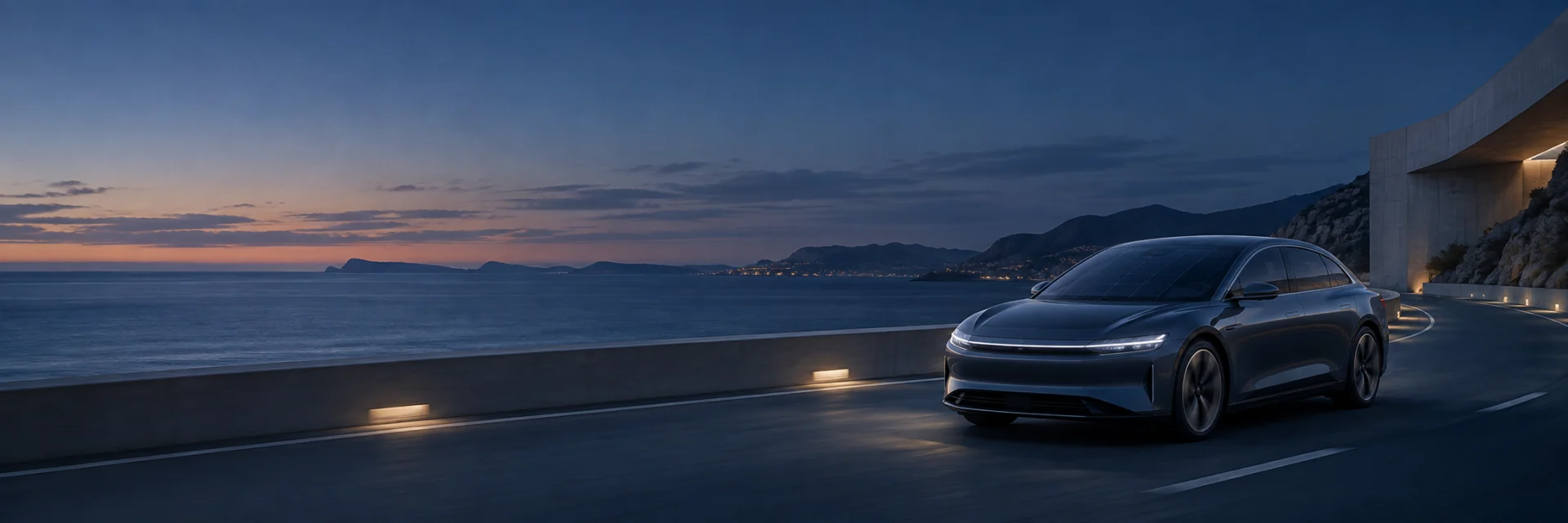
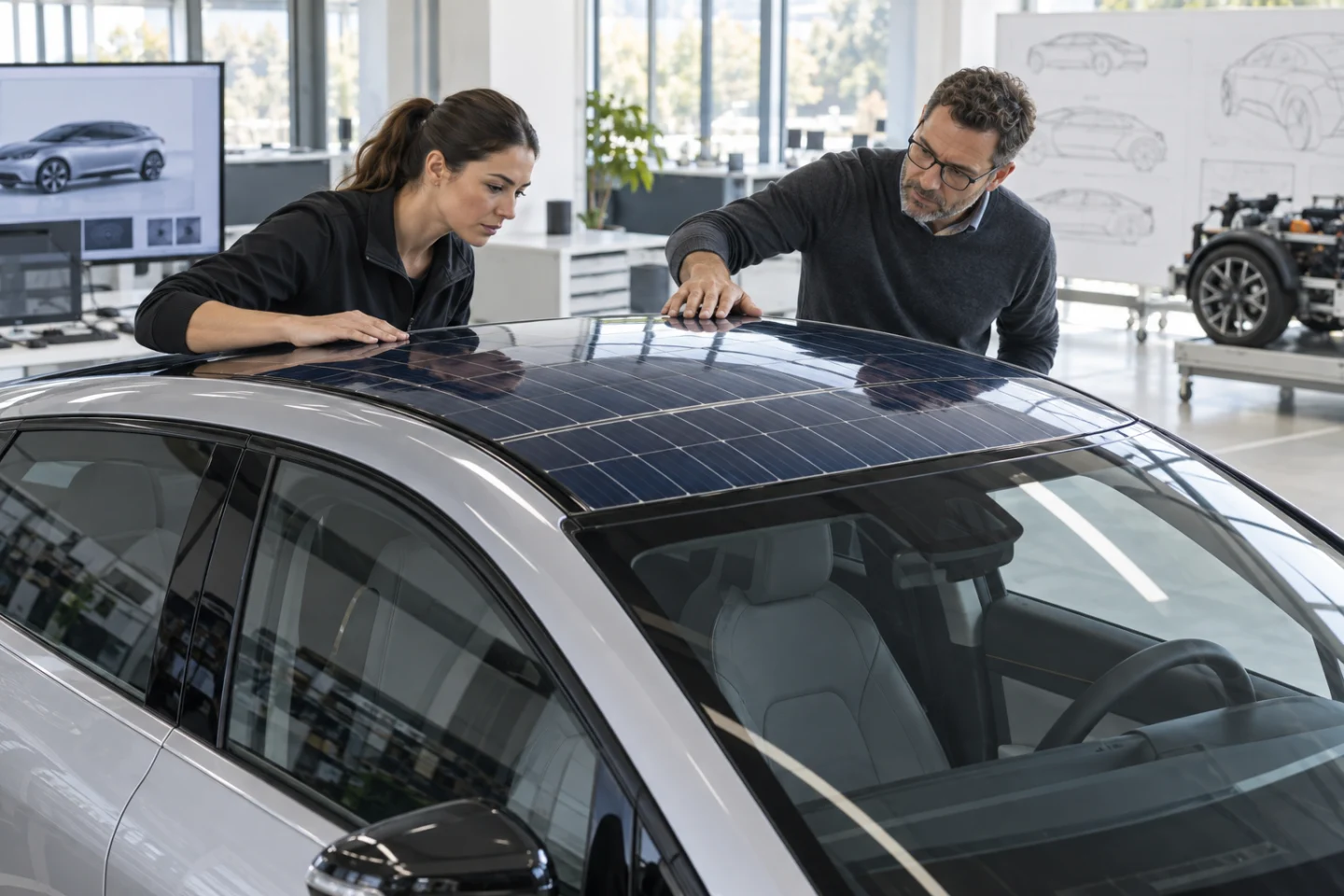
Vehicle-integrated photovoltaics can supplement onboard energy by turning roofs and selected body surfaces into active generation areas.
Useful results depend on geometry, shading, thermal conditions, appearance and power-electronics integration. Performance must be validated on the actual vehicle platform.
Platform-specific integration and validation
Design priorities
Integration without treating the car like a rooftop.
Vehicle surfaces create different mechanical, aesthetic and operating constraints from conventional fixed solar arrays.
Surface-aware design
Adapt cell layout and laminate construction to curvature, seams, glazing and partial shading.
Low-profile integration
Coordinate attachment, wiring and finish quality with the original vehicle architecture.
Road-ready durability
Plan for vibration, temperature cycling, weather exposure, cleaning and routine service.
Application pathway
From vehicle geometry to road validation.
Early collaboration reduces the risk of optimizing photovoltaic output while overlooking packaging or durability.
- 01
Define the vehicle use case, load profile and expected solar contribution.
- 02
Capture usable surfaces, curvature, shading and appearance targets.
- 03
Select cell format, laminate stack and segmentation strategy.
- 04
Design power conversion, protection and vehicle electrical interfaces.
- 05
Validate output, weathering, vibration and real-world operation.
Project readiness
Define the vehicle before defining the laminate.
A credible feasibility review starts with packaging data and energy goals, not only nominal panel wattage.
Review a VIPV application →- Vehicle type, duty cycle and operating regions.
- CAD surfaces and permitted integration zones.
- Target energy contribution and voltage range.
- Appearance, weight and thermal constraints.
- Automotive validation and service requirements.