Solar Racing
Competition solar engineering
Turn limited surface area into race-day endurance.
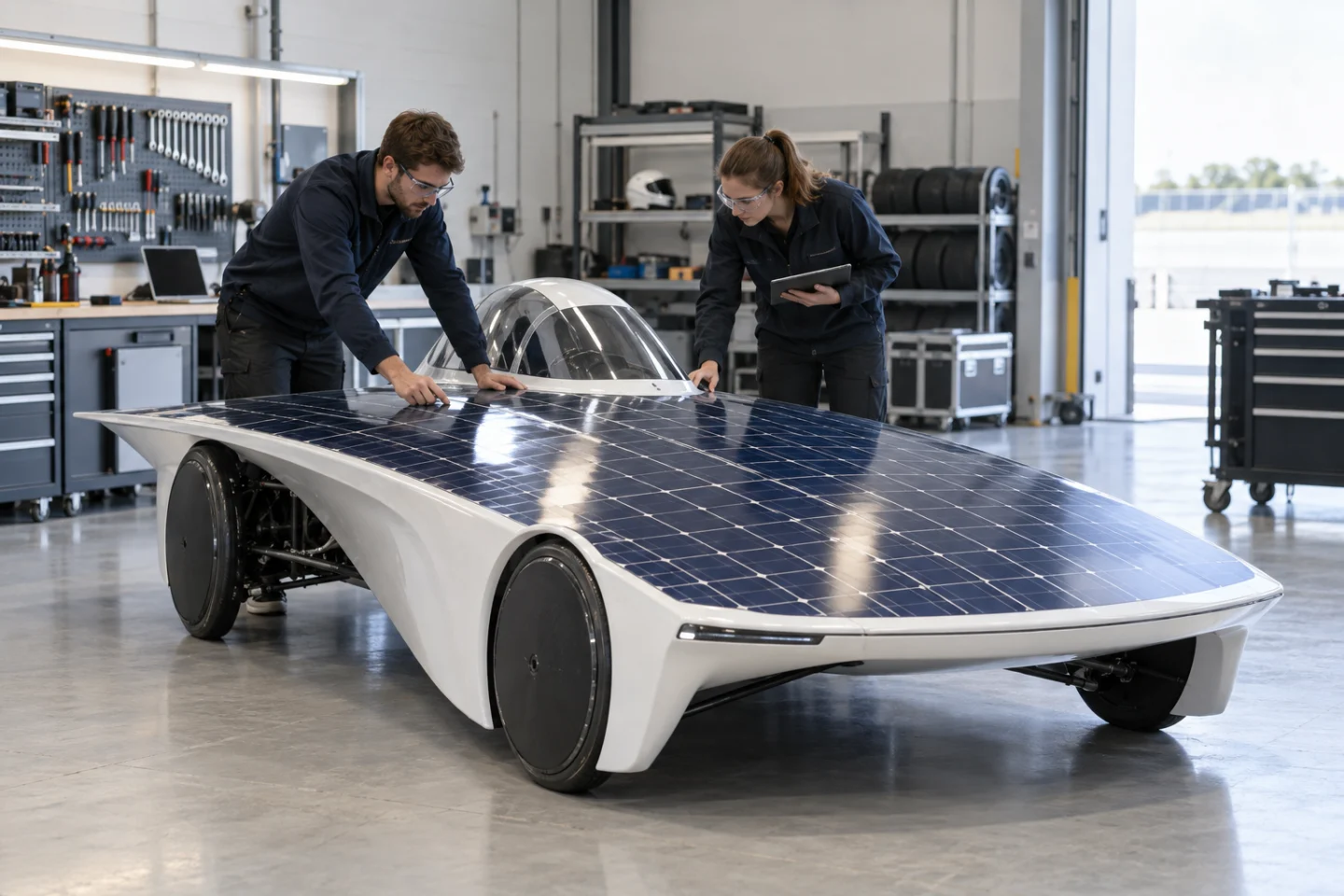
Solar racing compresses photovoltaic performance, aerodynamics and vehicle energy management into one demanding platform.
HyperCirra supports concept development around lightweight solar surfaces and electrical integration. Final output, reliability and race compliance require team-specific engineering and track validation.
Prototype and competition validation pathway
Design priorities
Designed around speed, mass and available sunlight.
A useful racing concept balances generation with the aerodynamic, structural and operational constraints of the vehicle.
High specific power
Pursue useful energy harvest without allowing the photovoltaic surface to dominate vehicle mass.
Aerodynamic integration
Map cell geometry and encapsulation to the body shape, airflow and service access.
Race energy strategy
Connect solar yield assumptions with battery capacity, speed targets and changing weather.
Application pathway
From race rules to a validated solar surface.
The best starting point is a shared model of the course, vehicle and energy budget rather than a standalone panel specification.
- 01
Confirm competition rules, route conditions and target performance.
- 02
Model the vehicle energy budget and daily solar resource.
- 03
Map usable body area, curvature, shading and cell layout.
- 04
Define electrical architecture, encapsulation and vehicle interfaces.
- 05
Validate through environmental testing and representative track operation.
Project readiness
Start with the course and the vehicle.
Bring the constraints that determine whether a photovoltaic concept can become a practical racing system.
Discuss a solar racing concept →- Competition class, route and operating dates.
- Target speed, energy budget and battery limits.
- Available body area and aerodynamic constraints.
- Electrical voltage, current and MPPT architecture.
- Testing, repair and race-day service requirements.